Sunday, 30 December 2012

#supply chain management


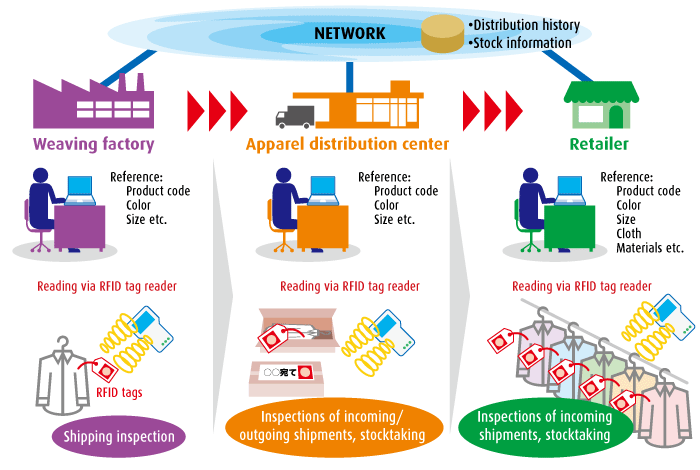
Supply chain management (SCM) is the management of a network of interconnected businesses involved in the provision of product and service packages required by the end customers in a supply chain. Supply chain management spans all movement and storage of raw materials, work-in-process inventory, and finished goods from point of origin to point of consumption.

Another definition is provided by the APICS Dictionary when it defines SCM as the "design, planning, execution, control, and monitoring of supply chain activities with the objective of creating net value, building a competitive infrastructure, leveraging worldwide logistics, synchronizing supply with demand and measuring performance globally."


Sunday, 16 December 2012

#chap2case: Say 'Charge It' with your cell phone


 *Question 1
Do you view this technology as a potential threat to traditional telephone companies? If so, what counter strategies could traditional telephone companies adopt to prepare for this technology?

It is a potential threat to the company because this new technology can make the existence company loss their customer. So, the existence company have to use Differentiation  strategy to adapt to this new changes that happen in the world today. By doing that,company create competitive advantages by differentiate their cell phone on 1 or more important features to the customer. These specials features also may give them price advantages and stimulate demand.


*Question 2
Using Porter's Five Forces describe the barriers to entry for this new technology.

Barriers to entry is the threat of substitute products or services. Customer might think that these new modern telephone company may have more expertise in this new technology. So, easily they can change to new cell phone, and the old fashion technology can loss customer.


*Question 3
Which of Porter's three generic strategies is the new technology following?


The Three Generics Strategies in the new technology is Differentiation. This strategies may allow the company to put a higher price because of the special features they have in their products. Based on this case, as the traditional company already have name, so, they just need to step up their game by putting this new technologies into their new coming product.


 *Question 4 
Describe the value chain of the business of using cell phones as a payment method.

For example, a girl buy a new shoes from ZALORA using direct debit transaction. So, the bank will directly deduct the money from our account and pay Zalora that  certain amount of money. The bank may charges a few ringgit for the service provided to the customer. from that, they can gain some profit through online payment. Once Zalora get the money, they will deliver the products to the customer.

*Question 5
What types of regulatory issues might occur due to this type of technology?

Fraud can happen from internet payment is fraud by the customer and by the company itself. customer may use others account to do payment or use different identity. So, if no payment is made, the company can't trace them.  


#chap 2: Identifying Competitive Advantage

hyeeee..this is competitive advantage chapter.

This chapter we will learn about a product or service that an organization's customers place a greater value on than similar offerings from a competitor.

The five forces in Porter's Five Forces Model is


BUYER POWER
Buyer power will be high when buyers have many choices of whom to buy and it will be low when their choices are few. To reduce buyer power an organization must make it more attractive to buy from the company not from the competitors. The best practices of IT- based is loyalty program in travel industry for example rewards on free airlines tickets or hotel stays.

SUPPLIER POWER
Supplier power will be high when buyers have few choices whom to buy from and will low when their choices are many. The best practices of IT to create competitive advantage. For example, business to business marketplace. Private change allow a single buyer to posts it needs and then open the bidding to any supplier who would care to bid. Reverse auction is an auction format in which increasingly lower bids.

THREAT OF SUBSTITUTES PRODUCTS & SERVICES
It will be high when there are many alternatives to a product or services and will be low when there are few alternatives from which to choose. Ideally, an organization would like to be on a market in which there a few substitutes of their product\or services

THREAT OF NEW ENTRANTS
High when it is easy for new competitors to enter a market and low when there are significant entry barriers to entering a market. Entry barriers is a product or services feature that customers have come to expect from organizations and must be offered by entering organization to compete and survive. Best practices of IT for example new bank must offers online paying bills, acc monitoring to compete.

RIVALRY AMONG EXISTENCE COMPETITORS
High when competition is fierce in a market and will be low when competition is more complacent.

Sunday, 9 December 2012

#chap 1:Business Driven Technology

TODAY, 
Electronics that connect to one another are found everywhere

For example : in the office, home, car,  etc.

IT impact on business operations :  
  • Reducing costs
  • Improving productivity
  • Generating growth
Information Technology Basics
Information Technology (IT) covering many field that deal with use of electronic computers and computer software to convert, store, protect, process, transmit and retrieve information securely.

Management Information Systems (MIS)is a general name for the business function and academic discipline covering the application of people, technologies, and procedures collectively called information systems - to solve business problems.
 Important elements of MIS :
  • Data, information and business intelligence
  • IT resources
  • IT cultures 


IT Resources  
Three key resources 
  • People
  • Information
  • Information technology
IT Cultures 

 Culture  
will influence the way people use information (their information behavior) and will reflect the importance that company leaders attribute to the use of information in achieving success or avoiding failure.
 Organizational Information Cultures :
  • Information-Functional Culture
Employees use information as a means of exercising influence or power over others.
  •  Information-Sharing Culture 
Employees across department trust each other to use information (especially about problems and failures) to improve performance.
  • Information-Inquiring Cultureth current trends and new directions.
  • Information-Discovery Culture 
Employees across departments are open to new insights about crises and radical changes and seek ways to create competitive advantages.